
Dumpster Sizes
What Size Dumpster Do I Need? A Scranton Homeowner's Sizing Guide
A Scranton dumpster company owner explains how to choose between 10, 15, 20 and 30 yard roll-offs by project, weight and driveway, including the plaster-and-lath weight trap in pre-war homes.
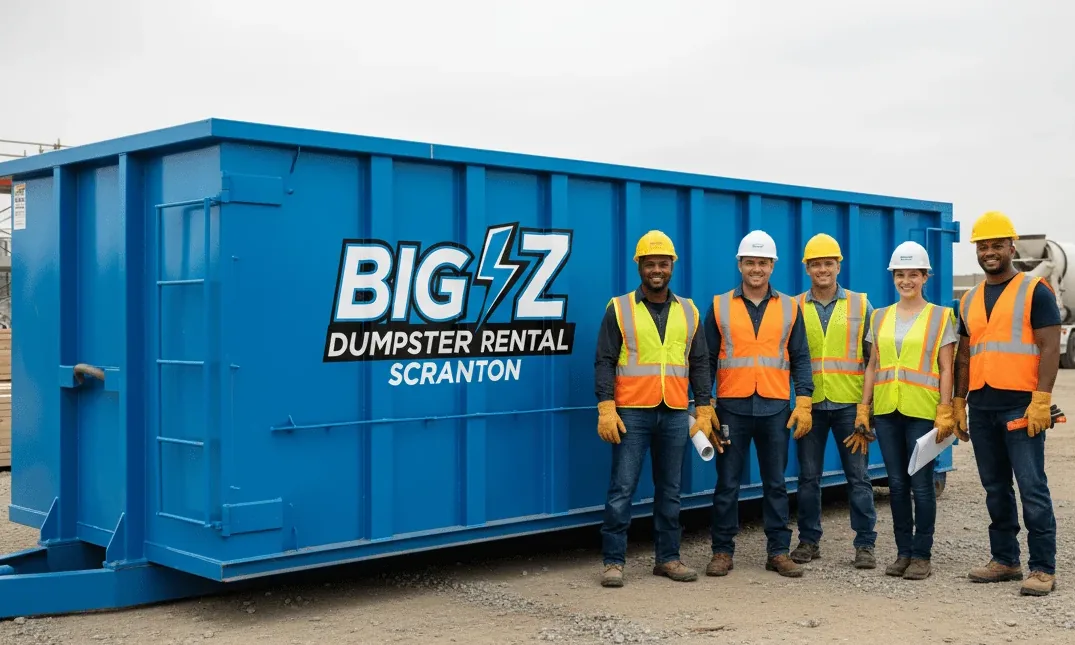
I've been dropping roll-offs on Scranton driveways since 2011, and I can tell you the two questions that decide whether a rental goes smoothly or turns into a headache are asked in the wrong order. Most people call and ask how big a can they need. The better first question is how heavy the debris is. Volume is what you see; weight is what gets you charged, and in a city built on anthracite coal money — plaster walls, brick chimneys, cinder-block foundations, slate roofs — weight is what bites homeowners around here.
This guide walks through what 10, 15, 20 and 30 cubic yards actually mean in truck loads and contractor bags, what each box measures on the ground, which ones fit the driveways people really have in Green Ridge and the Hill Section, and how to size a job so the driver can legally haul it away on the first try. If you'd rather just talk it through, that's what the phone is for — but read the weight section either way. It's the part that costs people money.
What a Cubic Yard Actually Looks Like
A cubic yard is a cube three feet on every side — 27 cubic feet. Picture a standard kitchen range, or roughly nine of the 3-cubic-foot contractor bags you buy at the hardware store on Keyser Ave. A full-size pickup bed, loaded level with the rails, holds about two to two and a half cubic yards. So a 10 yard dumpster is about four pickup loads. A 30 yard dumpster is roughly twelve to fifteen pickup loads, which is why people who plan on "just making a few dump runs" almost always underestimate the job by half.
Here's the translation I give people over the phone:
| Size | Typical Footprint (L x W x H) | Pickup Loads | 33-Gal Bags | Best For |
|---|---|---|---|---|
| 10 yard | ~12' x 8' x 3.5' | 4 | ~60 | Heavy debris, small demo, single-room gut, concrete, dirt, roof tear-off |
| 15 yard | ~14' x 8' x 4.5' | 6 | ~90 | Kitchen or bath reno, garage or basement clear-out, mid-size cleanout |
| 20 yard | ~16' x 8' x 5' | 8 | ~120 | Multi-room remodel, large cleanout, siding, decking, mixed C&D |
| 30 yard | ~20' x 8' x 6' | 12-15 | ~180 | Whole-house cleanout, additions, bulky light debris, estate jobs |
Every box on that list is about 8 feet wide at the rails. That number matters more than the length for most Scranton properties, and I'll get to why in a minute.
The Number One Mistake: Confusing Volume With Weight
Every roll-off comes with a flat rate that includes a tonnage allowance. The container has a volume limit and a weight limit, and you hit whichever one comes first. On a garage full of cardboard, old furniture and Christmas decorations, you'll fill 20 yards of space and barely touch the tonnage. On a chimney tear-down, you'll blow through the weight allowance with the box a third full.
Roll-off trucks and the roads they run on have legal axle limits. That's not a company policy — it's PennDOT weight law, and an overweight truck gets a driver fined and put out of service. So when a load is too heavy, it doesn't leave. That's the whole reason we push heavy debris into small cans.
The NEPA Plaster-and-Lath Trap
This is the single most expensive misunderstanding in Scranton, and it comes up weekly. If your house was built before roughly 1950 — which describes most of the row homes and double-blocks in South Side, West Scranton, Providence and the Hill Section — your interior walls are not drywall. They're wood lath with three coats of gypsum or lime plaster over top, often with a scratch coat packed full of sand and horsehair.
Modern half-inch drywall runs about 1.6 to 2 pounds per square foot. Plaster-and-lath runs 8 to 10 pounds per square foot, sometimes more where a mason laid it heavy. That's four to five times the weight for the exact same wall. A single 12x12 room gutted to the studs — walls and ceiling — can easily produce 3 to 4 tons of plaster debris while occupying maybe 8 cubic yards of space. Put that in a 20 yard box and you have a container that looks embarrassingly empty and is already too heavy to legally haul.
Coal-Era Masonry Is Worse
Same story, bigger numbers. Old brick, cinder block, stone foundation rubble, concrete steps, slate, and the flagstone walks you see all over Green Ridge run roughly 2,000 to 4,000 pounds per cubic yard. Three or four yards of that — a chest-high pile in the front of the container — is already two to four tons. For anything in that family we deliver a 10 yard can regardless of how big the overall project is, because the small box is engineered for dense loads and the truck can actually pick it up. If you're not sure what your material weighs, our concrete and heavy debris service page breaks it down further, and the what can go in a dumpster in Lackawanna County guide covers what's prohibited entirely.
The rule of thumb: if you can't lift a five-gallon bucket of it comfortably, size down and take two hauls. If you can carry an armload of it easily, size up and take one.
Will It Actually Fit in a Scranton Driveway?
Length on paper isn't the real constraint. Delivery needs roughly 60 feet of straight clearance for the truck to back in and roll the box off, plus about 23 feet of vertical clearance for the hoist arm to raise — which means low limbs, sagging service drops and porch roof overhangs all matter. Then there's the terrain, and Scranton has plenty of it.
- Green Ridge and Hill Section shared drives and back alleys. A lot of those alleys measure 9 to 11 feet between garages and fence lines. An 8-foot-wide box technically fits, but the truck needs room to swing. On those properties I usually recommend a 10 or 15 yard, or we set the box on the street with a permit rather than fight the alley.
- Short driveways on Providence Road and North Scranton. Many run 20 to 30 feet from curb to garage. A 15 yard leaves room to park a car behind it. A 30 yard eats the whole driveway and then some.
- Steep hillside grades. On the slopes off Moosic Street, the Hill Section climbs and parts of West Mountain, a heavy box on an incline is a real safety issue. We chock wheels and often prefer a smaller can on grades above about 10 percent, because a lighter box is more controllable coming off the rails.
- Driveway surface. Scranton asphalt takes a beating from freeze-thaw. We run plywood under the rails on request — see our notes on protecting your driveway during dumpster delivery.
If the driveway won't work, a street placement is usually the answer, and that requires a right-of-way permit from the city. We walk through the process in our Scranton dumpster permit guide, and you can verify current requirements directly with the City of Scranton.
Size by Project: What I Actually Send
| Project | Recommended Size | Why |
|---|---|---|
| Bathroom remodel (single bath) | 10 yard | Small volume but heavy: cast iron tub, tile, mortar bed, plaster |
| Kitchen gut | 15 yard | Cabinets and counters are bulky; stone tops add weight fast |
| Single-room cleanout | 10 yard | Furniture and boxes from one room rarely exceed 4 pickup loads |
| Whole-house cleanout | 30 yard | Light, bulky household goods; volume is the limit, not weight |
| Roof tear-off (1-2 layers, avg. Scranton row home) | 10-15 yard | Shingles run ~250 lbs per square; slate needs a 10 yard, period |
| Porch or deck demo | 15 yard | Lumber is bulky and light; concrete piers push it toward a 10 |
| Garage cleanout | 15-20 yard | Mixed junk, tires and metal excluded; sizes up quickly |
| Basement clear-out | 15 yard | Old coal bins, shelving and damp storage; watch for masonry |
Roofing deserves its own note. Asphalt shingles weigh roughly 250 pounds per roofing square (100 square feet) per layer, so a 20-square roof with two layers is about five tons — a 15 yard box maxed on weight, not volume. Slate is heavier still. Our roofing tear-off sizing guide and the roofing dumpster rental page have the full math.
When to Size Up, When to Take Two Hauls
Size up one step when the debris is light and bulky: furniture, cardboard, insulation, carpet, siding, drywall from a post-1960 house, deck lumber. The price difference between a 20 and a 30 is far less than the cost of a second haul, and you'll never regret the extra room on a cleanout. Our estate cleanout crews default to a 30 for exactly this reason.
Take two smaller hauls when the debris is dense — plaster, masonry, tile, dirt, roofing, concrete. Two 10-yard swaps almost always beat one overweight 20 that can't move. Separating heavy from light also helps at the transfer station; clean loads of concrete or brick often get processed differently than mixed construction debris, and the Pennsylvania Department of Environmental Protection sets the waste-handling rules the local facilities follow.
Overfill and Level-Load Rules
This one is non-negotiable. Debris cannot rise above the top rail of the container — not a mounded pile, not a mattress sticking out, not a 2x4 poking over the side. The load must be level with the walls so the tarp seats properly. Pennsylvania requires covered loads on the highway, and a tarp cannot cover a heaped box.
What happens if it's overfilled: the driver can't tarp it, so he can't legally leave your street. That means either you pull material off the top while the truck waits, or we come back after you've unloaded it, and you've lost a day. Neither is fun. Load flat, break down furniture and boxes, put the heavy dense stuff on the bottom and in the front, and fill the corners. A well-loaded 15 yard holds more than a sloppy 20.
Still Not Sure? Describe the Job
Honestly, a two-minute phone call beats any chart. Tell me the year the house was built, what rooms you're touching, and whether there's plaster or masonry involved, and I'll tell you the size and the tonnage you need. We've been doing residential dumpster rentals across Lackawanna County since 2011, with flat-rate pricing, no surprise fees, and same-day or next-day delivery when the schedule allows. Compare current pricing on our Scranton dumpster rental cost breakdown, or call Big Z Dumpster Rental at (570) 774-4910 and we'll get the right box on your driveway.
Questions this guide did not answer? Call (570) 774-4910. We would rather spend two minutes on the phone than have you order the wrong container.